
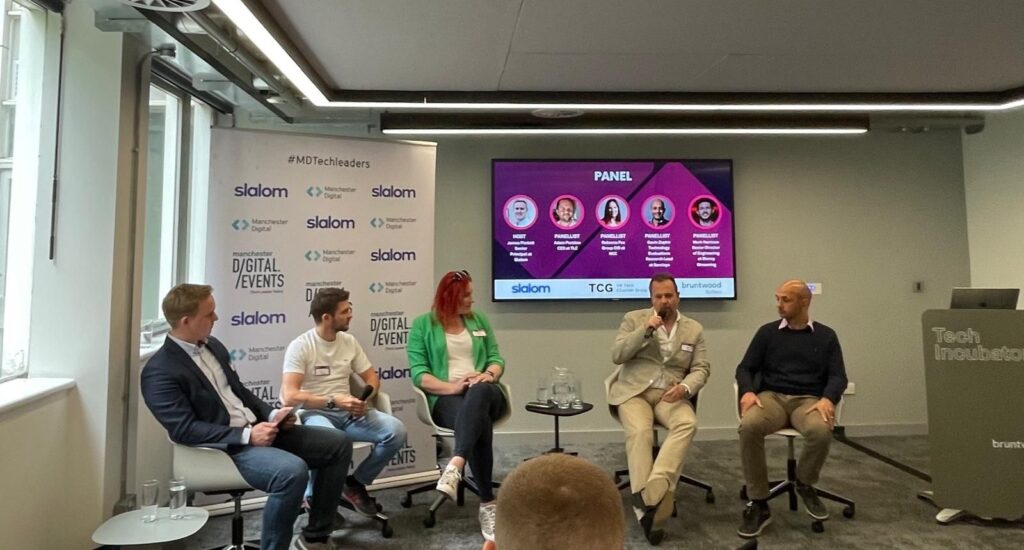
Bizpreneur Middle East ran a Founder Spotlight on me this month, and the interview made me put into words something I usually just assume. It is the idea underneath everything we build at TLC, and I want to set it out here in my own words rather than in an edited Q&A.
Where it started
I started on the floor. Front-of-house, then operations, then IT, in the days when the IT person in a restaurant group was whoever could make the printer work. Eighteen years at Individual Restaurants took me from there to CTO, and along the way I built Club Individual from my back bedroom into a programme with nearly two million members. Later I advised on loyalty for The Ivy Collection. Now TLC builds programmes and platforms for brands across the UK, Europe and the Gulf.
The thread through all of that is not technology. It is that I spent long enough on the floor to know what a good evening looks like from the guest’s side of the table, and long enough in systems to know how easily technology gets in the way of it.
The problem with hospitality data
Every venue of any size runs on at least three systems that do not talk to each other. The property management system knows who is staying. The point of sale knows what was ordered. The CRM knows what was emailed. The booking platform knows who reserved and who did not turn up. Each is good at its job. None of them has the whole guest.
So the maître d’ who greets a returning guest knows nothing of what the kitchen served them last time, and the marketing team sending a birthday offer has no idea the guest was in last night. The data is fragmented, and the experience fragments with it. The guest feels it as a slight coldness, a sense of not being known, even in a venue that is trying very hard to know them.
What we do, in plain terms, is bridge that. We join PMS, POS, CRM and bookings into one view of the guest, then put that view where it is useful: in a loyalty app, in a wallet pass, on a reporting screen, in the hands of the floor team.
Technology as enabler
I am wary of technology in hospitality that performs for its own sake. A tablet on every table is not hospitality. A chatbot that stands between a guest and a human being is not hospitality. The test I apply is simple: does this make the guest feel more known, or less?
A loyalty app passes the test when it means the server can see that the person at table twelve is a member who always orders the same wine, and can bring it without being asked. A reporting platform passes when it tells an operations director which regulars have stopped coming before the revenue line shows it. A wallet pass passes when the guest never has to download anything or remember a card.
The technology should be invisible to the guest and obvious to the operator. When it is the other way round, something has gone wrong.
Where we are going
We are scaling across the Middle East, with programmes live in the UAE and launching in Saudi Arabia, and we are beginning to look at APAC. The markets differ. The guest in Riyadh and the guest in Manchester have different expectations of service, different relationships with their phones, different ideas of what a reward is worth. What does not differ is the wish to be recognised. That turns out to be universal, and it is the only thing we are really in the business of.
If you take one thing from the interview or from this post, make it this. Before you buy or build anything for your guests, ask whether it will help your people know them better. If the answer is no, it is probably not worth the money.
If any of this is relevant to your estate, get in touch. There is more writing here, and the studio behind the work is TheLoyaltyCo.